
Cetearyl Olivate: Benefits, Uses and Safety for Skin
If you've ever read a skincare ingredient list and wondered what cetearyl olivate actually does, you're not alone.
The name sounds technical, but its role is fairly straightforward. Cetearyl olivate is an olive-derived cosmetic ingredient used primarily as an emulsifier and skin-conditioning agent. It helps oil and water stay properly mixed, contributes to the texture of creams and moisturisers, and helps give finished products a smooth, comfortable feel.
You can find cetearyl olivate in moisturisers, creams and other emulsion-based skincare products.
Here's what cetearyl olivate is, what it does for your skin, why formulators use it, and whether it's considered safe.
What is cetearyl olivate?
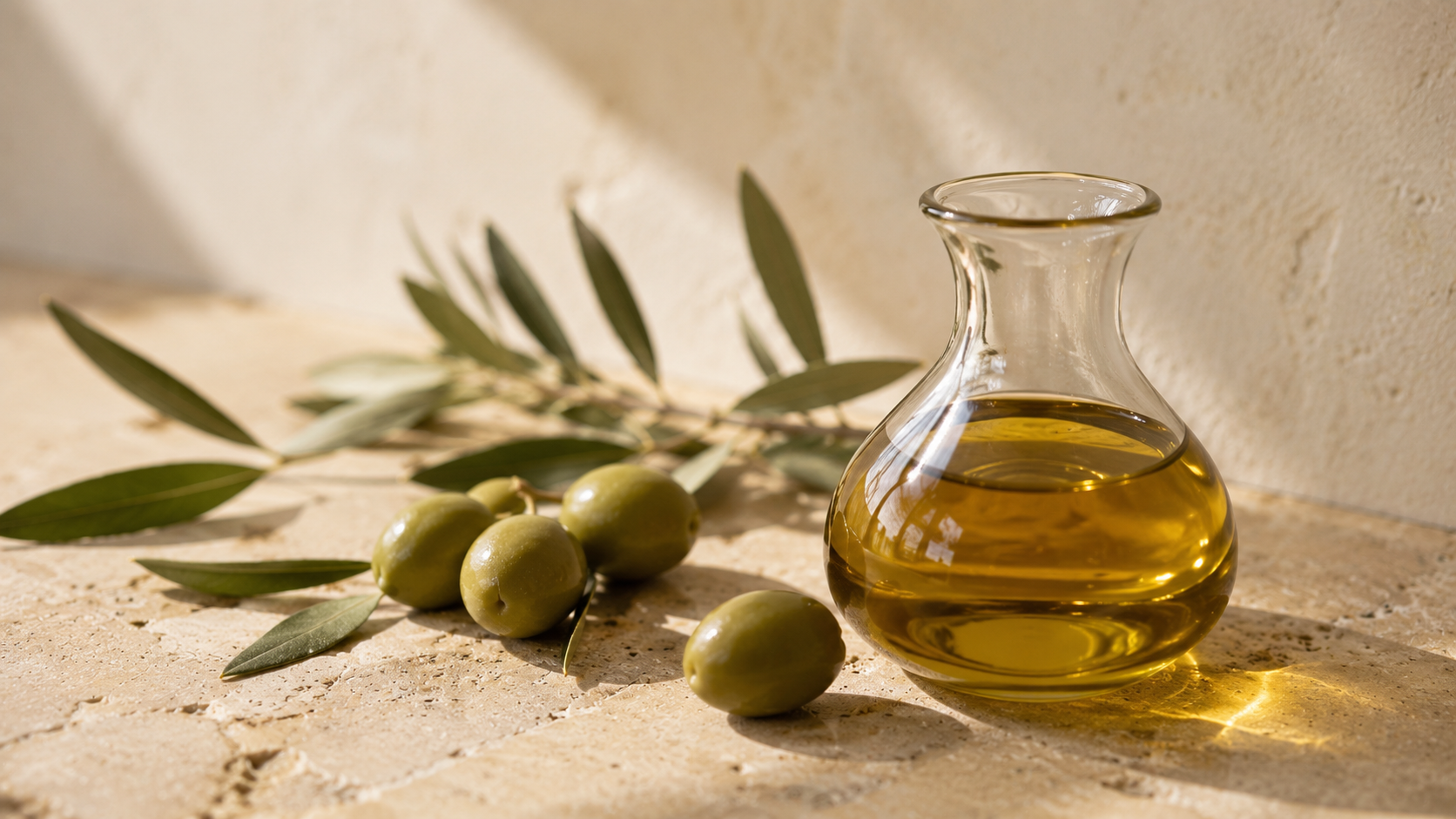
Cetearyl olivate is an olive-oil-derived cosmetic ingredient made from fatty acids derived from olive oil combined with a cetearyl alcohol component.
The name gives you a useful clue:
- Olivate refers to the olive-derived fatty-acid component.
- Cetearyl refers to the fatty-alcohol component.
The resulting ingredient is useful in skincare formulations because it helps combine ingredients that would otherwise separate, particularly oil and water.
That makes cetearyl olivate more of a behind-the-scenes formulation ingredient than a hero skincare active.
It's one of the ingredients that helps a moisturiser become a stable, spreadable cream rather than a mixture of separate oil and water phases.
And because it also has skin-conditioning properties, it can contribute to the soft, smooth feel you get when you apply a well-formulated moisturiser.
What does cetearyl olivate do in skincare?

Cetearyl olivate has several functions in a skincare formula. Three are particularly useful to understand.
1. It helps oil and water stay together
Oil and water naturally separate.
That's a problem when you're formulating a moisturiser because most moisturisers contain both.
Cetearyl olivate acts as an emulsifier, helping those different phases form a stable emulsion.
This gives the finished product a consistent texture and helps prevent the formula from separating.
In simple terms, it's one of the ingredients helping your moisturiser stay a moisturiser.
2. It improves the texture of skincare products
Cetearyl olivate also functions as a skin-conditioning ingredient and contributes to the way a product spreads across the skin.
That smooth, comfortable application you notice with a well-formulated moisturiser isn't accidental.
The texture of a skincare product comes from the way its ingredients work together, and ingredients such as cetearyl olivate can help create that spreadable, soft after-feel.
3. It helps leave skin feeling soft and conditioned
Cetearyl olivate isn't primarily a humectant in the same way that ingredients such as glycerine or hyaluronic acid are.
Its role is more closely associated with emulsification and skin conditioning.
As part of a finished formula, it can contribute to a moisturising, comfortable skin feel and help leave skin feeling soft and conditioned.
So if you see cetearyl olivate on an ingredient list, think:
Formula stability + texture + skin conditioning.
Not "miracle moisturising active".
Is cetearyl olivate a preservative?
No.
This is an important distinction.
Cetearyl olivate helps stabilise an emulsion, but that doesn't make it a preservative.
A cosmetic preservative is used to control microbial growth and protect a water-containing product from contamination.
Cetearyl olivate has a different job. It helps keep the oil and water phases physically mixed and stable.
So it shouldn't be described as a natural preservative or as the ingredient responsible for protecting a product from microbial contamination.
Is cetearyl olivate natural?
Cetearyl olivate is derived from fatty acids from olive oil, but simply calling it "natural" doesn't tell the full story.
The ingredient undergoes processing to create the specific compound used in cosmetic formulations.
For skincare, olive-derived or olive-oil-derived is a more precise description.
That's generally a better way to think about cosmetic ingredients too. Where an ingredient comes from is useful information, but so is understanding what it actually does in the finished formula.
Why is cetearyl olivate used in moisturisers?
 Moisturisers have to do several jobs at once.
They need to:
- combine water and oils
- remain stable during storage
- spread evenly over the skin
- feel comfortable rather than greasy
- leave skin feeling soft and conditioned
Cetearyl olivate can contribute to several of those characteristics at the formulation level.
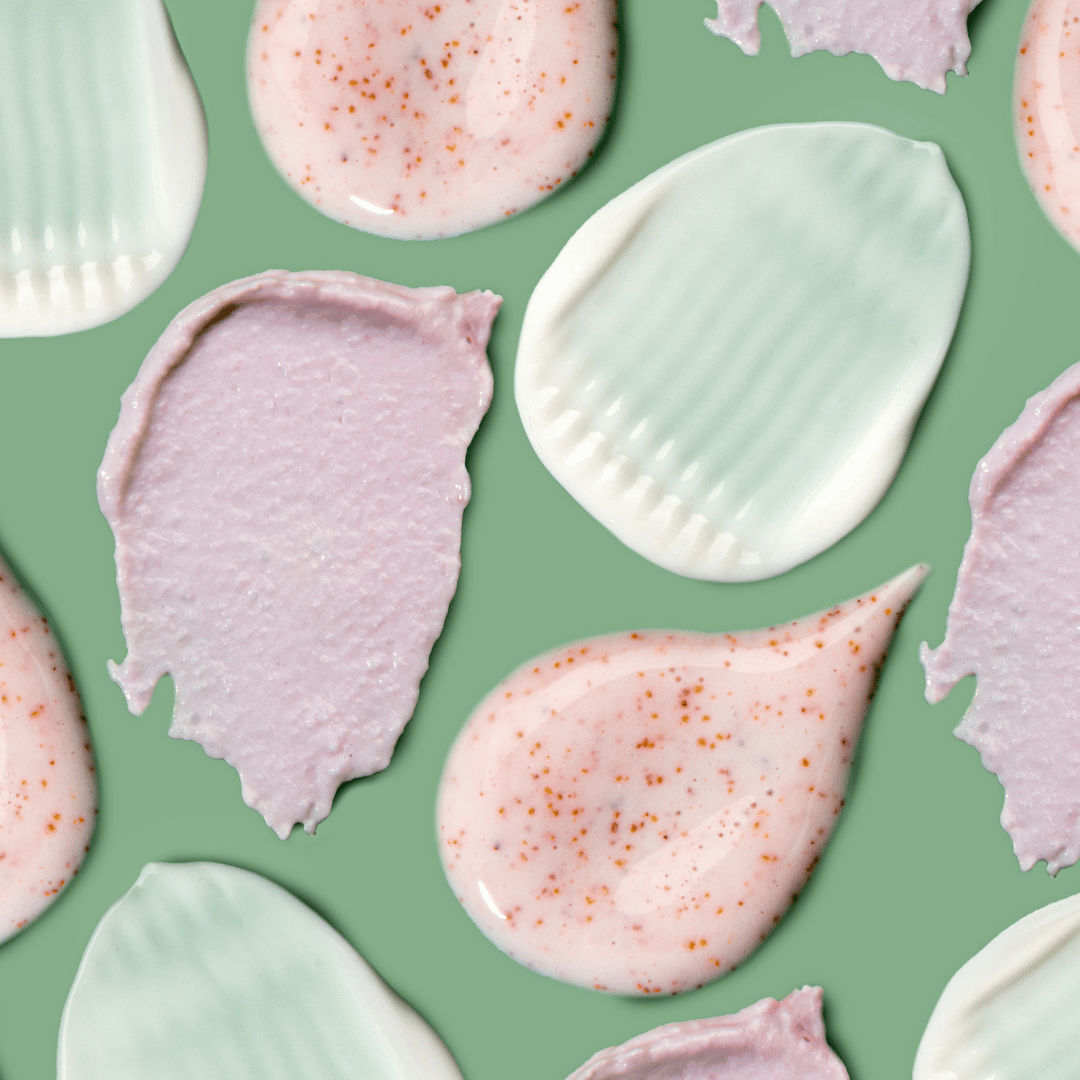
You'll find it in Dope Skin Co's Antioxidant Moisturiser alongside ingredients including hemp seed oil, niacinamide, hyaluronic acid, panthenol, botanical extracts and other skin-conditioning ingredients. The current product formula specifically lists both cetearyl olivate and sorbitan olivate. You'll also find it in our Retinol Eye Cream, Acai Purifying Clay Mask, and Coco Clay Exfoliating Face Scrub.
The important point is that cetearyl olivate isn't doing the whole job on its own.
A good skincare formula works because multiple ingredients perform different roles together.
Cetearyl olivate and sorbitan olivate: what's the difference?
You may also see sorbitan olivate alongside cetearyl olivate on an ingredient list.
That's because the two ingredients can be used together as part of an emulsifying system.
They're both derived from olive-oil fatty acids, but they're chemically different ingredients with different roles within a formulation.
You'll find both cetearyl olivate and sorbitan olivate in Dope Skin Co's Antioxidant Moisturiser, Retinol Eye Cream, Acai Purifying Clay Mask, and Coco Clay Exfoliating Face Scrub. Read the full breakdown in our Sorbitan Olivate guide.
This is a useful reminder that reading an ingredient list one ingredient at a time can be misleading.
Skincare formulas aren't simply collections of individual ingredients. The ingredients need to work together.
Is cetearyl olivate good for sensitive skin?
Cetearyl olivate is generally considered a well-tolerated cosmetic ingredient and is commonly used in skincare formulations designed to condition and moisturise the skin.
But there's an important distinction here:
No single ingredient can guarantee that a finished skincare product will suit every person with sensitive skin.
Your response depends on the entire formulation, including the other active ingredients, preservatives, fragrance and your own sensitivities.
If your skin is highly reactive, introduce new products one at a time and patch test first.
If you're specifically looking for products designed around sensitive or reactive skin, see our Sensitive Skin skincare range.
Is cetearyl olivate safe?
Cetearyl olivate is generally considered suitable for use in cosmetic formulations when properly formulated.
That doesn't mean an individual person can never react to it. Skin sensitivities are possible with virtually any cosmetic ingredient.
If you're introducing a new product, patch testing is a sensible precaution, particularly if you already know your skin is reactive.
For more information about ingredient safety and using Dope Skin Co products, you can also see our Skincare FAQs.
Does cetearyl olivate clog pores?
There's no useful universal "comedogenic score" that can tell you whether a finished skincare product will clog your pores simply because it contains cetearyl olivate.
Comedogenicity depends on the whole formulation, the concentration of individual ingredients and your own skin.
So if you have oily or acne-prone skin, don't automatically rule out a product because you see cetearyl olivate on the ingredient list.
Look at the formula as a whole.
For example, Dope Skin Co's Antioxidant Moisturiser is formulated for oily, combination and balanced skin and is positioned as lightweight, non-comedogenic hydration.
Is cetearyl olivate the same as olive oil?
No.
This is another common point of confusion.
Cetearyl olivate is derived from olive-oil fatty acids, but it is a chemically distinct ingredient with different properties and functions.
Olive oil itself is an oil used for its emollient and conditioning properties.
Cetearyl olivate is primarily used by formulators as an emulsifier and skin-conditioning ingredient.
So seeing "olivate" on an ingredient list doesn't mean the product simply contains olive oil.
Cetearyl olivate vs olive oil
| Cetearyl olivate | Olive oil | |
|---|---|---|
| Source | Derived from olive-oil fatty acids | Olive fruit |
| Main formulation role | Emulsifier and skin conditioner | Emollient/oil |
| Helps combine oil and water | Yes | No, not by itself |
| Used to improve texture | Yes | Can contribute to texture |
| Same ingredient? | No | No |
The two are related, but they aren't interchangeable.
The bottom line
Cetearyl olivate isn't a flashy skincare active.
And that's exactly why it's easy to overlook.
It's a functional formulation ingredient that helps oil and water stay properly combined, contributes to product stability and texture, and helps create a smooth, comfortable skin feel.
It's derived from fatty acids from olive oil and is commonly used in creams and moisturisers.
The biggest takeaway?
Cetearyl olivate helps make a skincare formula work properly, feel better and stay properly formulated.
It's not a preservative. It's not the same thing as olive oil. And it shouldn't be treated as a standalone miracle ingredient.
Good skincare comes down to the formula as a whole.
If you're interested in how different ingredients work together, you can explore the Dope Skin Co Antioxidant skincare range, which includes the Antioxidant Moisturiser, Antioxidant Gel Cleanser, Botanical Antioxidant Serum and other antioxidant-focused formulas.
Frequently Asked Questions About Cetearyl Olivate
What is cetearyl olivate?
Cetearyl olivate is an olive-oil-derived cosmetic ingredient primarily used as an emulsifier and skin-conditioning agent. It helps oil and water stay mixed in skincare formulations and contributes to the texture of creams and moisturisers.
What does cetearyl olivate do for skin?
Cetearyl olivate helps condition the skin and contributes to a smooth, comfortable skin feel. Its primary formulation role is emulsification, helping oil and water-based ingredients remain properly combined.
Is cetearyl olivate a moisturiser?
Not by itself. Cetearyl olivate is a formulation ingredient rather than a standalone moisturiser. It can contribute to a moisturising, comfortable skin feel when used as part of a finished skincare formula.
Is cetearyl olivate a preservative?
No. Cetearyl olivate is primarily an emulsifier and skin-conditioning ingredient. It should not be described as a preservative.
Is cetearyl olivate safe?
Cetearyl olivate is generally considered suitable for cosmetic use when properly formulated. Individual sensitivities are still possible, so people with reactive skin should patch test new products.
Is cetearyl olivate good for sensitive skin?
Cetearyl olivate is generally well tolerated, but whether a finished product suits sensitive skin depends on the complete formulation and the individual's skin.
Does cetearyl olivate come from olive oil?
Yes. The "olivate" component refers to fatty acids derived from olive oil. However, cetearyl olivate is a chemically distinct ingredient and isn't the same thing as olive oil.
Is cetearyl olivate the same as olive oil?
No. Cetearyl olivate is derived from olive-oil fatty acids but has different properties and functions. In skincare, it is primarily used as an emulsifier and skin-conditioning ingredient.
Does cetearyl olivate clog pores?
You can't determine whether a finished skincare product will clog pores simply by looking for cetearyl olivate on the ingredient list. Comedogenicity depends on the complete formulation and individual skin response.