Hemp Seed Extract in Skincare: Why Seed Only, and How It Differs From Hemp Oil
Hemp seed extract comes from the seed of the hemp plant (Cannabis sativa), not the flower or leaf, and that difference is the whole story. Our take: it's a quiet conditioning ingredient, and the seed-only part is what we care about.
What is hemp seed extract?
Hemp seed extract is made by taking hemp seeds and drawing out their components with a solvent or carrier. On a label you may see "Hemp Seed Extract", or an INCI name along the lines of Cannabis Sativa Seed Extract. The exact INCI wording varies between suppliers and preparations, so it's worth reading the full ingredient list rather than relying on the name alone.
The key point is the plant part. Hemp seed is the seed of the plant.
Whole-plant, flower or leaf extracts are a different category, and those are the ones that can carry cannabinoids such as CBD. A seed-based extract is not the same thing, which is why this page exists separately from our entry on hemp extract.
It's also not the same as hemp seed oil. The oil is the pressed fat from the seed, and we cover its fatty acids and comedogenicity in our hemp seed oil entry. An extract is a different preparation, so this page sticks to what the extract is and how it's regulated.
What does hemp seed extract do for skin?
In skincare, seed extracts are generally used as conditioning ingredients in a formula. That's a label-level description, not a promise about any finished product. We don't make treatment claims for this ingredient.
Why we use hemp seed extract
Hemp seed extract appears across a wide range of our products as a conditioning ingredient. Our formulator uses the seed.
Our view: a seed-based conditioning extract is a supporting player, and that's exactly the role we want it in.
Who is hemp seed extract good for?
Hemp seed extract can suit many skin types, but any plant-derived ingredient can irritate or trigger an allergic reaction in some people. Take extra care if your skin is reactive, if you have a known seed or plant allergy, or if you have a skin condition. For anything medical, speak to your GP or dermatologist.
If you're unsure how your skin will respond, patch test first. Our guide explains how to patch test skincare properly. Stop using a product if you get redness, stinging or itching that doesn't settle.
How do you use it?
You don't apply hemp seed extract on its own. It's an ingredient inside a finished product, so use that product as directed on its label. Introduce one new product at a time so you can tell what your skin is responding to.
What does it pair with?
In practice, it sits comfortably in a routine alongside humectants and plant oils. If you like layering, look at hyaluronic acid or niacinamide.
The sensible caution is about total load, not a single clash. If you're already using exfoliating acids or retinoids, adding several new products at once makes it harder to spot a problem. Change one thing at a time.
What does the research say?
The short version: early evidence. Published research on hemp seed extract itself is thin, and most of the skin research that exists looks at hemp seed oil.
Aditya and colleagues reviewed hemp seed extracts for skincare in 2024. They reported that husk-free seeds contained low levels of THC and that cosmetics promoting CBD may overstate what is present.
They also state there is no scientific evidence of skincare effectiveness yet and call for clinical trials. The authors acknowledge a commercial link to a supplier, so read it as one group's view.
The better-known human data is on oil. Vitek and Gosenca Matjaž (2024) tested hempseed or flaxseed oil-based liquid crystal formulations on adult volunteers without skin conditions.
Transepidermal water loss, a measure of skin barrier function, fell most in the formulations with the highest oil content. It was a small, single-group before-and-after design, it tested oil systems rather than extract, and it doesn't show that any finished product will do the same.
Safety and regulation
European Union: Under Annex II of the EU Cosmetics Regulation, entry 306 prohibits cannabis, cannabis resin, and extracts and tinctures of cannabis, with limits relating to CBD that is not sourced from the flowering or fruiting tops. Sourcing from hemp varieties is not an automatic guarantee of compliance, and CosIng is not an official source of legal status (Cosmetic, Toiletry and Perfumery Association, CTPA).
Australia: A law-firm review of hemp in Australian cosmetics notes that hemp products, particularly hemp seed oil, are increasingly used in cosmetics and are lawful where THC and cannabidiol levels fall within exceptions in criminal and poisons laws. It gives a Tasmanian example exempting products not for internal human use that contain 50 mg/kg or less of THC. Cosmetics shouldn't carry therapeutic claims.
Hemp seed extract in Dope Skin Co products
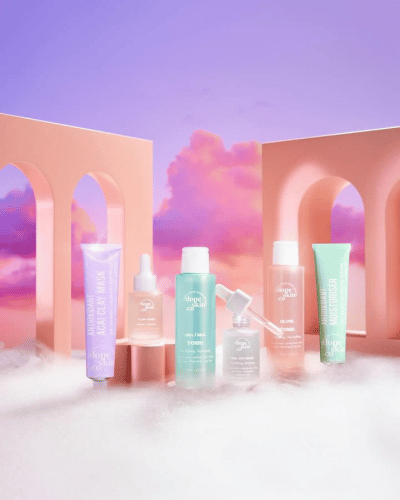
Hemp Seed Extract appears in the full ingredient list of these products: the Botanical Antioxidant Serum, the Antioxidant Moisturiser and the AHA/BHA Resurfacing Serum. It also appears in the Antioxidant Gel Cleanser, Acai Purifying Clay Mask, Coco Clay Exfoliating Face Scrub, Glow Tonic, Glow Serum, Calming Collagen Serum, AHA/BHA Exfoliating Tonic, AHA / BHA Exfoliating Cleanser and Retinol Eye Cream with Vitamin C & Peptides. You can browse the antioxidant skincare collection, or take the skincare quiz to find what suits your skin.
Frequently asked questions
Does hemp seed extract contain CBD?
Seed-based extracts are a different material from flower or leaf extracts, which are the ones associated with cannabinoids. One review reported trace cannabinoids can still be detected in some seed preparations, so quality control matters. We don't claim any Dope Skin Co product contains CBD or any cannabinoid.
Is hemp seed extract the same as hemp seed oil?
No. Oil is the pressed fat from the seed, while an extract is a different preparation. See our hemp seed oil entry for the oil.
Is it legal in cosmetics in Australia?
Hemp products are lawful in cosmetics where THC and cannabidiol levels fall within the relevant state and federal exceptions.
Can it treat eczema or acne?
We make no treatment claims. The research on hemp seed extract for skin conditions is limited, and most of it concerns oil.
Related ingredients
For the oil and the whole-plant question, read hemp seed oil and hemp extract. Other plant-derived ingredients you may be comparing include jojoba oil, rosehip oil and green tea extract.
Sources
- Aditya A, Min TJ, Vimolmangkang S, Kim NP. Cannabis in cosmetics: regulatory and scientific insights into hemp seed extracts for skincare. J Cosmet Med 2024;8(2):104-111. Journal page.
- Vitek M, Gosenca Matjaž M. Clinical application of hempseed or flaxseed oil-based lyotropic liquid crystals: evaluation of their impact on skin barrier function. Acta Pharm 2024;74(2):301-313. PubMed.
- CTPA. Cannabis, cannabis extracts and CBD in cosmetic products. April 2019. CTPA page.
- HWL Ebsworth. Review on the regulation of industrial hemp based food products and cosmetic products in Australia. 2023. Article.
- Burnett CL et al. Safety Assessment of Plant-Derived Fatty Acid Oils. Int J Toxicol 2017;36(3 Suppl):51S-129S. SAGE.