Kojic Acid for Skin: What It Does and Who It Suits
Kojic acid is a skin-brightening ingredient made by fungi during fermentation. It is one of the most studied options for an uneven-looking tone, and the EU safety committee considers it safe in cosmetics at up to 1%.
Key takeaways
- What it does. It slows the enzyme your skin uses to make pigment, which is why it turns up in brightening formulas.
- How much. Up to 1% is the level the EU safety committee (SCCS) considers safe in cosmetics.
- Who it suits. People with an uneven-looking tone who patch test well. Reactive skin should go slowly.
- The catch. It can irritate like any brightening active, so judge the whole formula, not just the label name.
- The daily habit. Sunscreen matters more than any serum when you want an even-looking tone.
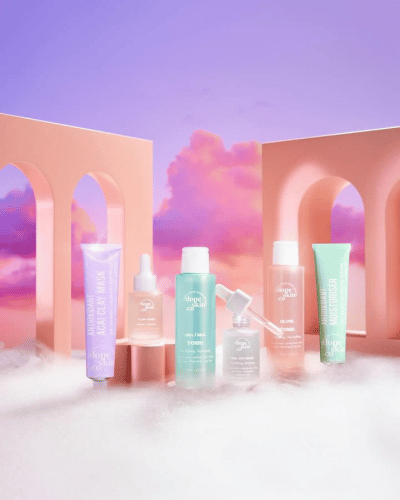
- In our range. We do not use it. Our Glow Serum takes a different route.
What is kojic acid?
Kojic acid is a small molecule that fungi produce while fermenting foods such as rice. It was first described in 1907 and has been used in skin-brightening products for decades.
In skincare it sits with the brighteners, alongside azelaic acid, licorice root extract and arbutin. Despite the name it is not an exfoliating acid, and it does not work by sloughing off skin.
What does kojic acid do for skin?
Kojic acid slows tyrosinase, the enzyme skin cells use to make melanin. Less pigment production is the idea behind its use on an uneven-looking tone, sun spots and the marks left after a breakout.
That makes it a supporting player rather than a quick fix. Brightening ingredients help skin look more even over time, and they need daily sunscreen to hold their ground.
Looking for another route to an even-looking tone? Our Glow Serum combines acetyl glucosamine, niacinamide and licorice root extract with hydrating ingredients.
Not sure where to start? Take the skin quiz.
Is kojic acid safe, and how much is in skincare?
The EU Scientific Committee on Consumer Safety (SCCS) adopted its final opinion on kojic acid in 2022. It concluded that kojic acid is safe as a skin-lightening agent in cosmetic products at concentrations of up to 1%.
The opinion covers kojic acid applied to skin. It does not cover derivatives such as kojic acid dipalmitate, which are separate ingredients with their own assessments.
Any brightening active can irritate, and kojic acid is no exception. If your skin is reactive, patch test on your inner forearm for a few days before it goes near your face.
Who should use kojic acid, and who should skip it?
Kojic acid suits people with an uneven-looking tone who already tolerate actives well. If you are building a routine from scratch, start with sunscreen and one brightening ingredient, not three.
Skip it, or ask your GP or pharmacist first, if your skin is inflamed, broken or reacting to something else. A mark that is new, changing or has uneven edges needs a skin check, not a serum.
Home mixing is the one thing we would steer you away from. Kojic acid powders blended in a kitchen make the strength a guess, and the 1% line matters.
How do you use kojic acid?
Follow the directions on the product. Most kojic acid products are leave-on serums or creams, used on clean skin and followed with moisturiser.
Add one new active at a time so you can tell what your skin likes. Wear SPF 30 or higher every morning, because daily sun exposure is what keeps pigment marks coming back.
What pairs well with kojic acid?
Niacinamide and hyaluronic acid are easy partners, because they support comfort and hydration while a brightening ingredient does its job. Vitamin C is a common pairing for the same tone-evening goal.
Be careful about stacking it with strong exfoliating acids or retinoids in the same routine. Layering several actives at once is the quickest way to a stressed barrier.
What does the research say?
A 2022 review in Cosmetics describes kojic acid as one of the most studied skin-lightening ingredients. It reports benefit for pigmentation concerns, including melasma.
The same review also lays out the ingredient's drawbacks and the newer derivatives designed to improve on it. The evidence is stronger for kojic acid as an ingredient than for any single product containing it, so judge a formula as a whole.
Do we use kojic acid in our products?
We do not currently use kojic acid in any Dope Skin Co product.
Our Glow Serum lists acetyl glucosamine, niacinamide and licorice root extract for an even-looking tone. You can read how licorice root extract works in our licorice root extract guide.
Not sure which routine fits your skin? Our quiz picks it for you.
FAQ
Is kojic acid the same as hydroquinone?
No. Hydroquinone is a separate lightening ingredient that is scheduled as a medicine or poison in Australia, so it is handled very differently. Our hydroquinone guide explains the Australian rules.
What strength of kojic acid should I look for?
Up to 1% is the level the SCCS considers safe in cosmetics. Stronger is not better, and a higher number is a reason to be cautious.
Can you use kojic acid every day?
That depends on the formula and on your skin. Start a few times a week and build up only if your skin stays comfortable.
How is kojic acid different from azelaic acid?
Both sit in the brightening group, but azelaic acid is a different molecule with different rules in Australia. Our azelaic acid guide explains how it works and who it suits.
If you want to compare brighteners by how they work, our guide to thiamidol covers a newer tyrosinase inhibitor and what the research shows.
For an antioxidant-led angle on pigment, glutathione is another ingredient in the conversation, with earlier-stage research.