Gluconolactone (PHA) for Skin: What It Does and Who It Suits
Gluconolactone is the polyhydroxy acid (PHA) worth knowing if stronger exfoliating acids tend to leave you stinging. It's a close relative of glycolic and lactic acid with larger molecules, it exfoliates lightly and holds water well, and review authors describe PHAs as causing less irritation than AHAs. That's a description from research, not a guarantee for any person or product.
What is gluconolactone?
Gluconolactone is the lactone (cyclic ester) form of gluconic acid, a compound linked to glucose oxidation, and it belongs to the PHA family. PHAs have more hydroxyl groups than the alpha hydroxy acids (AHAs), which makes the molecules larger and gives them a strong attraction to water. A 2004 review in Cutis by Grimes and colleagues describes PHAs as a newer class related to AHAs, with similar benefits and, in the authors' words, less irritation.
If the AHA, BHA and PHA names are new to you, our guide to AHAs vs BHAs vs PHAs puts them side by side.
What does gluconolactone do for skin?
In skincare, gluconolactone is used for two things:
- Light exfoliation: like other hydroxy acids, it helps loosen dead cells on the skin surface so skin looks smoother.
- Hydration: PHAs hold water well. In a 2021 study in Skin Research and Technology, 16 healthy women used 10% and 30% gluconolactone on opposite sides of the face, and facial skin hydration increased significantly one week after the last application. The two strengths performed similarly.
The Grimes review also describes PHAs as having antioxidant properties and as helping strengthen the skin barrier. That's the authors' summary of the PHA literature, and many of the studies behind it were small.
Why we use gluconolactone
In the AHA/BHA range, gluconolactone sits alongside lactic, glycolic, salicylic, malic and tartaric acids, so the exfoliating effect comes from the formula as a whole.
Our view: when you're building a routine around acids, a PHA is a sensible one to have in the mix. It's still an exfoliating acid, so treat it with respect.
Who is gluconolactone good for?
PHAs are often chosen by people who find stronger exfoliating acids uncomfortable, but "milder" is relative. Gluconolactone can still sting or cause dryness in some people, particularly when layered with other exfoliants.
If you have reactive skin, introduce it slowly and patch test first. Our patch testing guide explains how.
Exfoliating acids can make skin more sensitive to the sun, so daily sunscreen matters. The US Food and Drug Administration says AHAs can increase skin sensitivity to the sun. Wear sun protection while using them, and take the same care with gluconolactone.
How do you use it?
You use gluconolactone through a product that contains it, such as a tonic, serum or cleanser. Follow the directions on that product, including how often to use it. If you already use other exfoliating acids, don't add another exfoliant on top without checking how your skin responds.
What does it pair with?
Gluconolactone is often combined with other hydroxy acids and with hydrators such as glycerine and beta glucan. Because it's itself an exfoliating acid, the thing to watch is stacking several exfoliants in one routine, not a particular clash.
What does the research say?
The short version: promising chemistry, small studies. The main sources are the Grimes review of PHAs in photoaged skin (Cutis, 2004), an Edison and colleagues study comparing a PHA regimen with an AHA regimen (Cutis, 2004, whose title reports comparable antiageing effects), a Bernstein and colleagues in vitro study on gluconolactone and ultraviolet radiation (Dermatologic Surgery, 2004) and the 2021 hydration study.
We've described the findings of the Grimes review and the 2021 study above; the other two are listed for context. Studies of this kind are often small, and an exfoliating acid in a finished product still needs its own evidence.
Safety and regulation
The CIR Expert Panel (now the Expert Panel for Cosmetic Ingredient Safety) assessed five glycolactones in a report published in the International Journal of Toxicology in 2026. It concluded that gluconolactone is safe in cosmetics in the present practices of use and concentration described in the assessment.
Gluconolactone's reported functions are skin conditioning and chelating (binding metal ions). The Panel found the data insufficient to conclude on the other four glycolactones, and in the US its antiacne use falls under drug rules outside the Panel's remit.
The 10% and 30% strengths in the 2021 study were used in a controlled protocol and shouldn't be read as typical leave-on levels, so we don't quote a typical range.
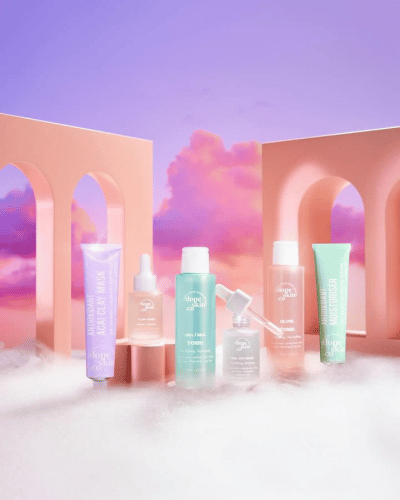
Gluconolactone in Dope Skin Co products
Gluconolactone is listed in these products:
- Glow Serum
- AHA/BHA Exfoliating Tonic
- Glow Tonic
- Calming Collagen Tonic
- Calming Collagen Serum
- AHA/BHA Resurfacing Serum
- AHA / BHA Exfoliating Cleanser
- Retinol Eye Cream with Vitamin C & Peptides
- Retinol & Peptide Night Repair Cream
Not sure which exfoliant suits you? Take our skincare quiz.
Frequently asked questions
Is gluconolactone the same as gluconic acid?
They're related. In water, gluconolactone exists in equilibrium with gluconic acid (FAO/WHO JECFA monograph on glucono-delta-lactone).
Is gluconolactone good for sensitive skin?
Review authors describe PHAs as less irritating than AHAs, but individual reactions vary. Patch test and introduce it slowly.
Is a PHA stronger than glycolic acid?
It's generally described as milder, because the molecules are larger. The product's overall formula decides the result.
Does gluconolactone exfoliate?
Yes, lightly, like other hydroxy acids.
Can I use gluconolactone with retinoids?
Follow the directions on each product and introduce one new product at a time. If your skin feels irritated, scale back.
Related ingredients
Sources
- Grimes PE, Green BA, Wildnauer RH, Edison BL. The use of polyhydroxy acids (PHAs) in photoaged skin. Cutis 2004;73(2 Suppl):3-13. PubMed 15002656.
- Jarząbek-Perz S, Mucha P, Rotsztejn H. Corneometric evaluation of skin moisture after application of 10% and 30% gluconolactone. Skin Research and Technology 2021;27(5):925-930. PubMed 33769633.
- Edison BL, Green BA, Wildnauer RH, Sigler ML. A polyhydroxy acid skin care regimen provides antiaging effects comparable to an alpha-hydroxyacid regimen. Cutis 2004. PubMed 15002657.
- Bernstein EF, Brown DB, Schwartz MD, Kaidbey K, Ksenzenko SM. The polyhydroxy acid gluconolactone protects against ultraviolet radiation in an in vitro model of cutaneous photoaging. Dermatologic Surgery 2004. PubMed 14756648.
- Ferguson P, Bergfeld WF, Belsito DV, et al. Safety Assessment of Glycolactones as Used in Cosmetics. International Journal of Toxicology 2026;45(2_suppl):124S-134S. Journal page
- US Food and Drug Administration. Alpha Hydroxy Acids. fda.gov
- Joint FAO/WHO Expert Committee on Food Additives. Glucono-delta-lactone, toxicological monograph (FAS 42). INCHEM