
Stearic Acid in Skincare: Not an Exfoliant, Here's What It Does
Stearic acid isn't an exfoliating acid, whatever the name suggests. It's a fatty acid that helps oil and water mix into a stable, smooth texture, and we think of it as quiet structural support rather than a skin active.
What is stearic acid?
Stearic acid is an 18-carbon saturated fatty acid used in skincare to help creams, masks and cleansers hold together and feel smooth. It's found in many plant and animal fats, and cosmetic grades are made by refining and processing those fats. On an ingredient list it's a working ingredient, not a fragrance-level trace.
Don't confuse it with the AHA and BHA acids used for exfoliation. Stearic acid doesn't peel skin and has no exfoliating action on its own. If you'd like to understand those, our guide to AHAs vs BHAs vs PHAs covers the difference.
What does stearic acid do in a formula?
The Cosmetic Ingredient Review (CIR) lists stearic acid as functioning as an emulsifying surfactant, a cleansing surfactant and a fragrance ingredient. In practice, formulators use it to:
- help oil and water stay blended in creams and masks
- give a thicker, more cushioned feel to a texture
- support the cleansing action in wash-off products
It isn't a hydrating or anti-ageing active, so no skin result should be put down to stearic acid alone.
Why we use stearic acid
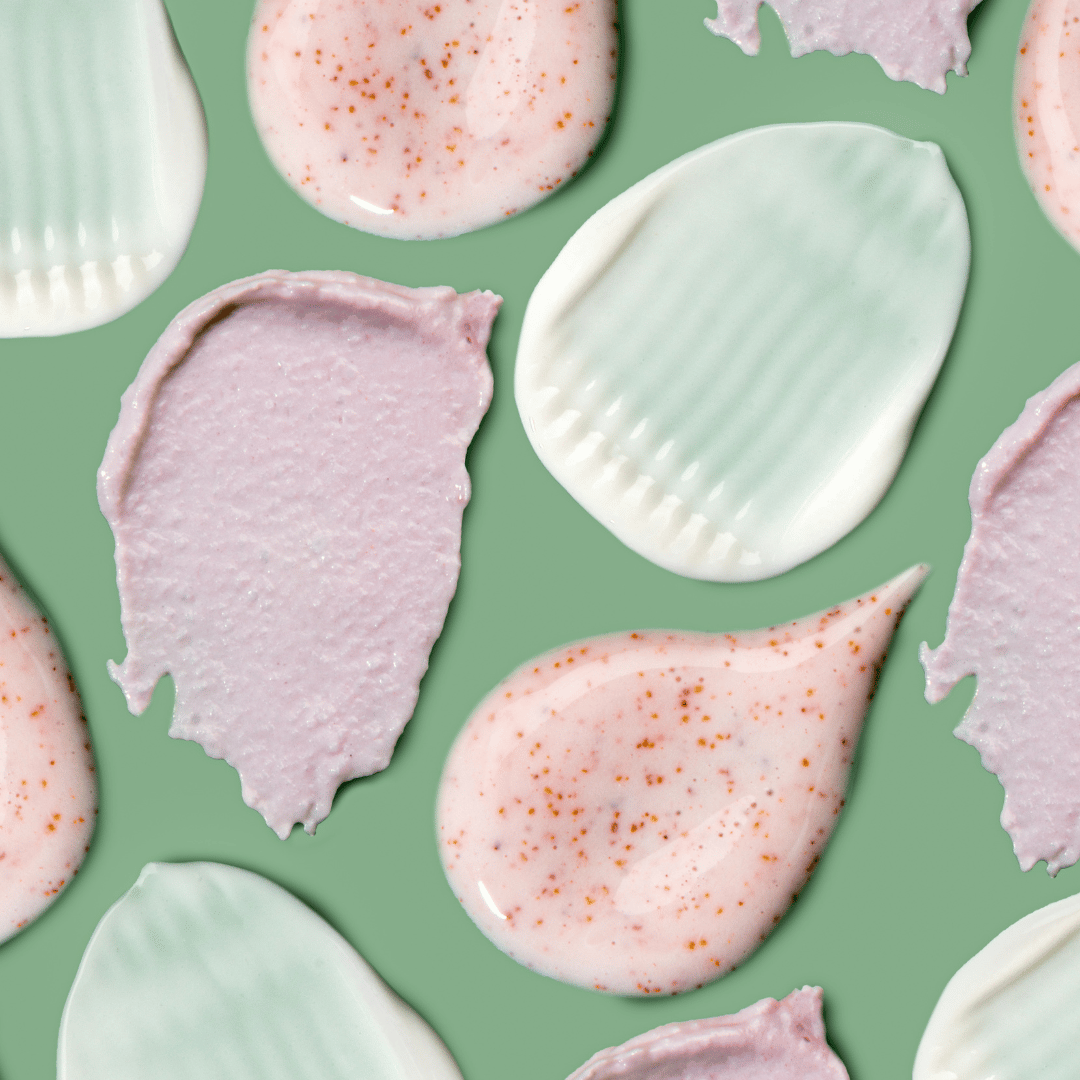
Stearic acid is in two of our wash-off products, the Acai Purifying Clay Mask and the Coco Clay Exfoliating Face Scrub. Our formulator uses it for the job it's best at: helping those textures hold together and feel smooth.
Our view: the unglamorous ingredients are often the ones that decide whether a mask or scrub is pleasant to use. Stearic acid is one of those.
Who is stearic acid good for?
Most people tolerate stearic acid well in finished products. People who are very reactive should patch test any new product, and anyone with a known reaction to a fatty acid or to a specific product should avoid it.
If a cream or mask feels heavy on oily or congestion-prone skin, the full formula is the thing to look at, not stearic acid in isolation. The CIR safety review doesn't address how stearic acid affects congestion, so we make no claim either way.
How do you use it?
You don't use stearic acid by itself. You meet it inside a product, so follow the directions on that product. For wash-off products such as clay masks and scrubs, apply as directed, rinse thoroughly and moisturise afterwards.
Patch test a new product before using it on your whole face. Our patch testing guide shows how.
What does it pair with?
Stearic acid is commonly combined with fatty alcohols such as cetyl alcohol and with emulsifiers such as cetearyl olivate to build creamy textures. There's no known reason to avoid combining it with other skincare ingredients. The thing to watch is the overall formula.
What does the research say?
The short version: a safety review, not a skin-results story. The CIR report is a safety review of existing animal, human patch-test and use-concentration data. It doesn't show that stearic acid improves skin, and we don't claim that it does.
What it does tell you is that fatty acid emulsifiers like this are widely used and have been reviewed. The report also shows stearic acid as one of the most frequently used ingredients in this group, which reflects how common it is in creams and eye and skin care products.
Safety and regulation
Stearic acid is named in the CIR's 2019 report on fatty acids and fatty acid salts. In that report, the CIR Expert Panel concluded these ingredients, including stearic acid, are safe in the present practices of use and concentration, provided they are formulated to be non-irritating and non-sensitising.
The report notes that reported use concentrations of stearic acid reach up to about 37.4% in rinse-off products and up to about 21% in leave-on products, with up to 3% in face and neck sprays (2016 industry survey data). Patch tests of some formulations containing up to 13% stearic acid caused mild to intense redness in some cases, while repeated-insult patch tests at lower levels (under 1% to 13%) reported no irritation or sensitisation.
That's why the Panel attached the "non-irritating" condition. Stearic acid was not found to be genotoxic in the tests reviewed.
Stearic acid in Dope Skin Co products
Stearic Acid is listed in the ingredient lists of two of our wash-off products:
Check each product page for the full ingredient list. Not sure which products suit you? Take our skincare quiz.
Frequently asked questions
Is stearic acid bad for skin?
No. The CIR Expert Panel concluded stearic acid is safe in the present practices of use and concentration, provided the formula is non-irritating and non-sensitising.
Is stearic acid an exfoliating acid?
No. It's a fatty acid used to build texture and help oil and water mix. It doesn't exfoliate.
Is stearic acid comedogenic?
The CIR safety review of stearic acid doesn't address comedogenicity, so we don't make a claim. Look at the whole formula and your own skin's response.
Where does stearic acid come from?
It occurs in plant and animal fats. The source of a particular grade varies, so check with the brand if it matters to you.
Can I use it if I have sensitive skin?
Many people with sensitive skin use products containing it. Patch test first and stop if irritation occurs.
Related ingredients
Sources
- Cosmetic Ingredient Review. Safety Assessment of Fatty Acids and Fatty Acid Salts as Used in Cosmetics (final report, released 15 May 2019). Report on cir-safety.org; Report copy hosted by the US FDA