Caprylyl/Capryl Glucoside in Skincare: What It Does and Why We Use It
Caprylyl/Capryl Glucoside is a sugar-based cleansing ingredient that sits at the milder end of the surfactant range, and it's a sensible pick for tonics and cleansers. Think of it as a helper, not a hero: it lifts oil and dirt, adds a light lather and keeps other ingredients evenly mixed.
What is Caprylyl/Capryl Glucoside?
It's an alkyl glucoside, sometimes called an alkyl polyglucoside. The molecule has two parts. One end is a sugar (glucose), which likes water.
The other end is a short fatty chain of 8 to 10 carbons (the caprylyl and capryl parts), which likes oil. That split is what makes it a surfactant.
It's non-ionic, which just means it carries no electrical charge. In a formula it works as a cleansing agent and foamer, and it can also help an emulsion hold together. The sugar and fatty alcohol can come from different suppliers, so the name alone doesn't tell you where it started.
What does Caprylyl/Capryl Glucoside do for skin?
It doesn't treat anything. It changes how a formula behaves, and that's the whole point.
- Cleansing: it wraps around oil and loosened dirt so water can rinse them away.
- Keeping things mixed: in a tonic or serum it helps keep oils, extracts and other ingredients evenly spread through the water.
- Foaming: it adds a light lather to wash-off products.
Surfactants vary in how much they strip the skin barrier. Alkyl glucosides are generally studied as the milder end of that range. How a finished product actually feels depends on the whole formula, though, not one ingredient.
Why we use Caprylyl/Capryl Glucoside
You'll find it across our tonics and in our AHA/BHA Exfoliating Cleanser. Our formulator uses it for the jobs it does best: lifting away oil and dirt, adding a light lather and helping ingredients stay evenly mixed in water.
Our view: when a product is meant to cleanse or tone without feeling harsh, a mild, sugar-based surfactant is a smart place to start. It isn't the star of the formula, and it isn't meant to be.
Who is Caprylyl/Capryl Glucoside good for?
Most people will meet it in a cleanser or toner without any trouble. Still, it's a surfactant, and surfactants can bother some skin.
Take extra care if your skin is reactive or broken, or you've had contact dermatitis before. Alkyl glucosides as a family (mostly decyl and lauryl glucoside) have been reported as contact allergens in patch testing clinics, so anyone with a known glucoside allergy should check the full ingredient list.
The CIR report also notes that undiluted Caprylyl/Capryl Glucoside was severely irritating to the eyes in lab tests. Keep cleansing and toning products out of your eyes.
If you're unsure, patch test first. Our guide shows how: patch testing, how to do it properly.
How do you use it?
You don't choose a dose. It's one line in a longer ingredient list, so you use the product it sits in, as directed on the label. For a rinse-off cleanser, that usually means massaging onto damp skin and rinsing well.
For a toner, it means applying to clean skin as the instructions say. Introduce one new product at a time, and stop if your skin stings or turns red.
What does it pair with?
Alkyl glucosides are often used alongside other mild surfactants such as cocamidopropyl betaine and sodium cocoyl isethionate. Humectants such as glycerine and sodium PCA sit comfortably in the same routine.
There's no specific ingredient it must not be mixed with. The practical point is layering.
If you wash with a surfactant cleanser and then use exfoliating acids, such as glycolic acid or salicylic acid, add them one at a time so you can tell what your skin is reacting to. Our guide to AHAs, BHAs and PHAs explains the differences.
What does the research say?
The short version: well reviewed as a family, with real caveats. Most of the evidence is on the alkyl glucoside family rather than this one molecule.
- CIR report (2013): in animal tests Caprylyl/Capryl Glucoside caused slight irritation on non-occluded skin at 3 to 9% and moderate irritation at 27%, and repeated occluded exposure caused severe irritation. Human patch and repeat-insult tests on decyl, lauryl and coco-glucosides found them at most slightly irritating and not sensitising at the concentrations tested. The panel also noted case reports of allergic reactions to decyl glucoside.
- Surfactant mixtures (Turkoglu et al., 1999): a 24 hour closed patch study in 13 volunteers tested sodium laureth sulfate alone and with lauryl glucoside, polysorbate 20 and cocamidopropyl betaine. Irritation rose with dose, and the authors concluded it depends on total surfactant concentration, how the product is applied and surfactant structure. In other words, a glucoside in a mix is not automatically mild.
- Alkyl polyglucoside emulsifiers (Tasic-Kostov et al., 2014): a book chapter reviewing skin tests for APG-based emulsions concludes that APG surfactants can help formulate mild emulsion vehicles.
Our reading: alkyl glucosides are a reasonable, well-reviewed surfactant class, with caveats on concentration, formulation and individual allergy.
Safety and regulation
CIR (United States): Caprylyl/Capryl Glucoside is one of 19 alkyl glucosides in the CIR safety assessment of Decyl Glucoside and other alkyl glucosides. The panel concluded they are safe in the present practices of use and concentration when formulated to be non-irritating. The report was finalised in December 2011 and published in the International Journal of Toxicology in 2013.
That condition applies to the finished product, and it isn't a promise that every product or person will have no reaction. The report's industry survey recorded Caprylyl/Capryl Glucoside at 0.3 to 3% in rinse-off products and 0.06 to 0.8% in leave-on products, as active ingredient. Those are reported use levels, not legal limits.
Caprylyl/Capryl Glucoside in Dope Skin Co products
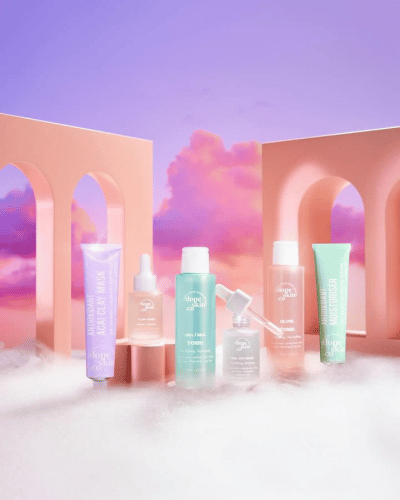
It appears in the full ingredient list of these Dope Skin Co products:
Not sure where to start? Take the skincare quiz.
Frequently asked questions
Is Caprylyl/Capryl Glucoside a sulfate?
No. It's a sugar-based alkyl glucoside, not a sulfate surfactant like sodium lauryl sulfate. Being a different class doesn't on its own guarantee a gentler result, as formulation and concentration matter too.
Is it the same as decyl glucoside?
No, but they're close relatives. Caprylyl/Capryl Glucoside has shorter fatty chains (8 to 10 carbons). CIR assessed both in the same report.
Can it cause an allergic reaction?
Rarely, but it's possible. Allergic contact dermatitis has been reported to alkyl glucosides, mainly decyl and lauryl glucoside. If a product causes itching, redness or a rash, stop using it and see a doctor.
Is it a preservative or an active?
Neither. It's a cleansing and foaming surfactant that also helps ingredients mix.
Where does it come from?
It's made by reacting glucose with fatty alcohols. The sugar and fat sources differ between suppliers, so origin can't be read from the name.
For a related ingredient with a known allergy catch, see our guide to decyl glucoside.
Related ingredients
Read more about cocamidopropyl betaine, sodium cocoyl isethionate and glycerine. If you use exfoliating acids, see glycolic acid and salicylic acid. You can also browse our AHA / BHA Exfoliating Cleanser.
Sources
- Fiume MM, Heldreth B, Bergfeld WF, et al. (CIR Expert Panel). Safety assessment of decyl glucoside and other alkyl glucosides as used in cosmetics. Int J Toxicol 2013;32(5 Suppl):22S-48S. Journal article (SAGE).
- Cosmetic Ingredient Review. Final Safety Assessment: Decyl Glucoside and Other Alkyl Glucosides as Used in Cosmetics. 19 December 2011. CIR final report (PDF).
- Turkoglu M, Pekmezci E, Sakr A. Evaluation of irritation potential of surfactant mixtures. Int J Cosmet Sci 1999;21(6):371-382. Publication record.
- Tasic-Kostov M, Vesic S, Savic S. Objective skin performance evaluation: how mild are APGs to the skin? In: Alkyl Polyglucosides (book). Elsevier 2014:135-161. Record.